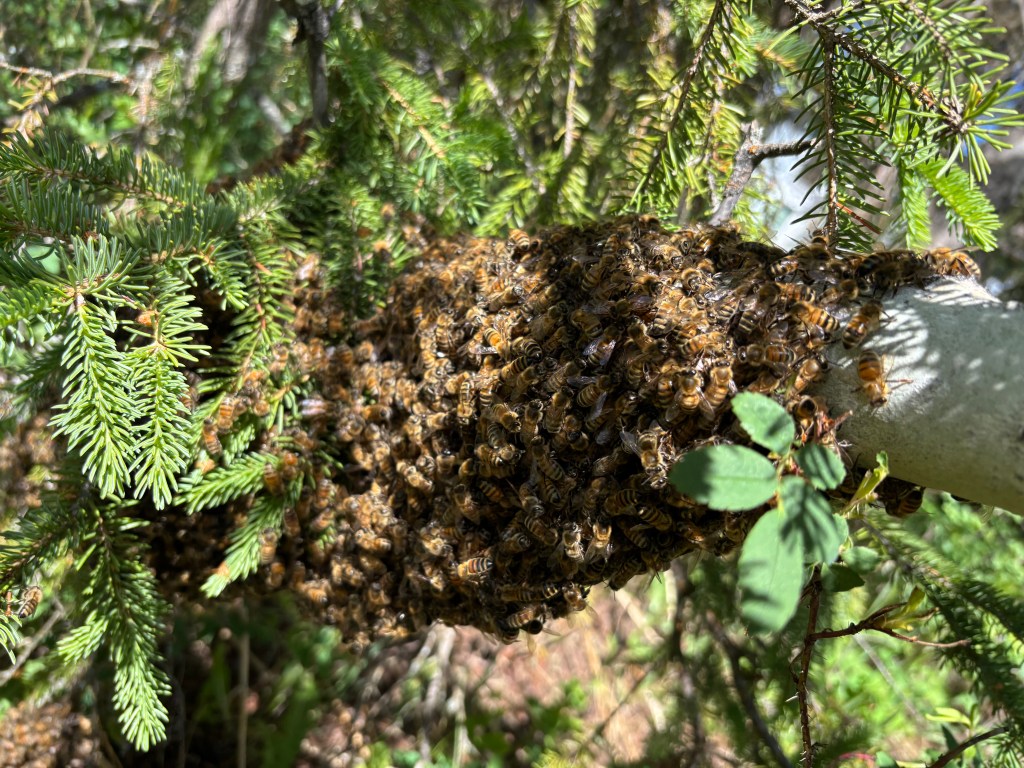
The sound was unreal. An intense drone, a roar of wings frantically beating. I searched the treetops and almost missed them, a tight coil of bee bodies scrunched on an alder branch practically touching the ground.
One of my hives had swarmed. I was expecting it. It was a new nuc – a nucleus colony or a small, working starter colony built around a laying queen, and it was strong. When the hive gets too full, they swarm, splitting the colony in half and leaving with the old queen for a new location. The rest are left in the hive with a new queen.
Thankfully, they landed on a branch close to the ground. I have had other swarms that have been in chimneys or 40 feet up a tree. Neither was easy to gather. Just the other week, there was a swarm in a tree at one of the local elementary schools. It took a bit of time to gather them up – watched by an audience of young students – but they are now settling in to their new hive in the bee yard, which is now home to five hives.
Although this hive was close to the ground, it wasn’t easy to disentangle. The bees were wrapped around the branch, making it difficult to get the cluster with the queen. It took me a few tries, and more stings than I want to count, to get them into the new hive.
Being a beekeeper isn’t something you learn overnight. Nor is something you can master. Every day, I learn something new from the bees. They are amazing creatures with a wonderful cooperative hierarchy. The queen, worker bees and drones all have roles to play.
The worker bees – females of course – are especially productive. They take care of the queen, build comb, clean the hive – ever hear of undertaker bees? – cap comb and ripen nectar and pack pollen. They also defend the hive and seek out new locations for a swarm.
I managed to get the swarm back into a hive but time will tell if they stick around. They are now bearding on the front of the hive, and, as a still new beekeeper, I’m not entirely sure what to do. Stay tuned on my bee adventures.
 Cariboo Diaries