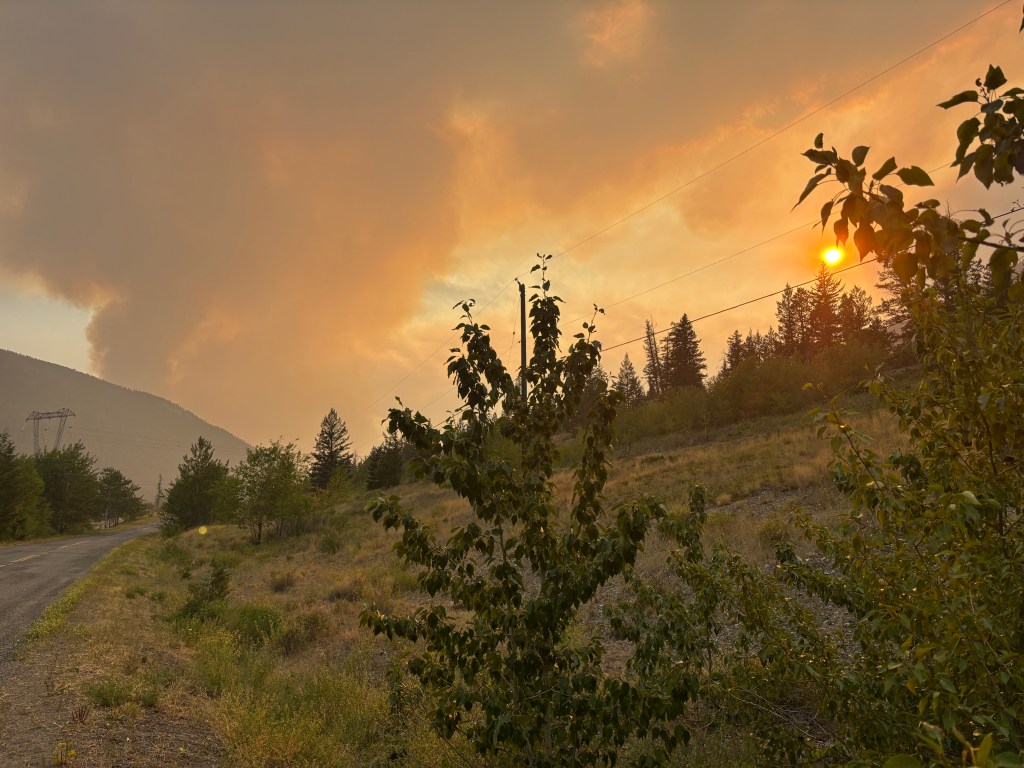
Just a few days after the Pear Lake Wildfire started, a group of people gathered at Kelly Lake, the local swimming hole. They watched as the smoke from the Pear Lake Wildfire huffed and puffed and wondered why the firefighters – some of whom were also taking a break at the lake – didn’t put it out.
The firefighters said they were monitoring the situation. The BC Wildfire Service said it was too dangerous to put boots on the ground in steep terrain that was tinder dry from a months-long drought. But where were the helicopters, the retardant?
One resident watched every day from her home, not far from the fire. She saw one helicopter one day, two the next. One the third day.
And then everything blew up.
“By Day 4, it was just going wild,” said resident Jo Gosset. “It was probably spreading before that but we couldn’t see it.”
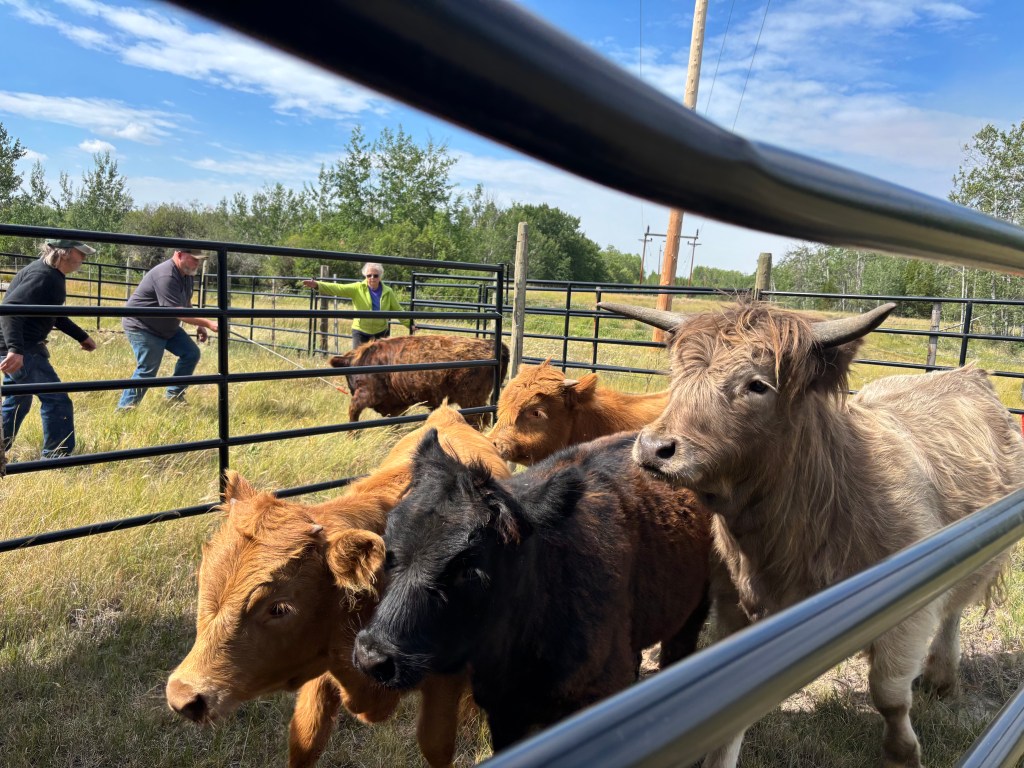
The village of Clinton called a public meeting. An evacuation was planned for noon the next day, July 24. With the Fifitynine Creek wildfire also raging off Big Bar Lake Road, ranchers rushed to move cattle. Some cattle didn’t make it, dying in a wall of flames. Other cattle owners, like Peter Brandle, had 20 minutes to load a dozen cows into a borrowed trailer built for six.
“We got them out but it was way to close for comfort,” Brandle said. “That fire moved way faster than anybody thought.”
Clinton is no stranger to wildfires. Residents are still experiencing PTSD from the 2017 Elephant Hill and Gustafsen Lake wildfires, which forced an evacuation of the village for close to a month. On July 24, residents were placed in a similar predicament with two wildfires raging out of control and expected to merge.
Most residents fled, but others stay behind to protect their properties and their neighbours’ lands, fearing they wouldn’t survive if they left. I wrote more on this in the Tyee as well as the Clinton Lariat, which I publish monthly, so I won’t reiterate it.
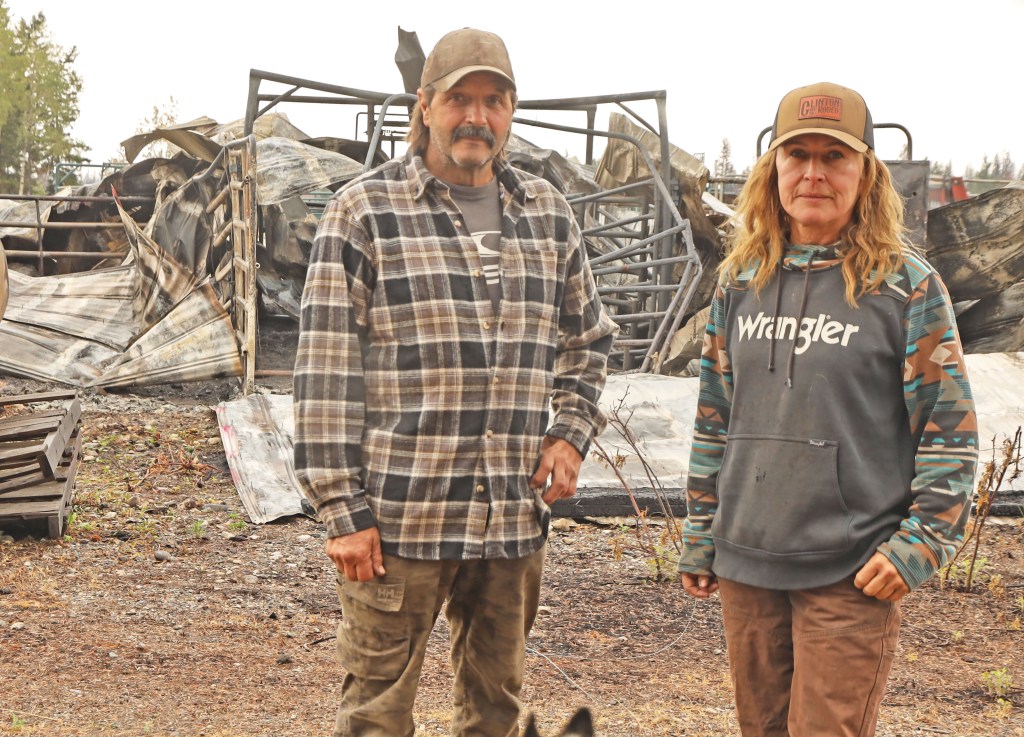
Barb Edmonson, who has a ranch on Big Bar Lake Road, was one of those who stayed behind. As the fires merged at the southern edge of her property, she begged for help. She got little support. A sprinkler was placed 200 yards from her hayshed; she was given an old pump that seized up. She was left fighting the fire on her own, with the help of friends.
She lost 11 outbuildings but saved her home and a heritage barn. Until the rains came, she was fighting peat fires every single day.
At the same time, multiple sprinklers we were placed on neighbouring properties. Her friend Dwight Gall has a photo of a sprinkler on a trailer, which wasn’t even a primary home.
BCWS said 150 firefighters were battling the Pear Lake fire, which had grown to 66,871 hectares. In comparison, a wildfire in South Green Lake (started around the same time on July 17) was attacked with two helicopters who made four hits with a bomber and retardant and was extinguished fairly quickly, according to 70 Mile Volunteer Fire Chief Jeff Warner.
South of Williams Lake, the Felker fire also saw rapid attack. I was pleased to see this as it was coming toward 108 Mile Ranch where I live -and where I was hosting five evacuees – but still…
As the Pear Lake and Fiftynine Creek fires consumed their beloved forests, and other fires took precedence, Clinton residents say they felt abandoned by the province.
And they are demanding answers as to what happened.
I can’t say I blame them. When I asked the ministry about the discrepancy regarding resources, the province said in an email that resources are used to “help our most valuable assets” and there’s no guarantee resources will be available for other fires right away.
This was evident in this year’s fire season. The properties on South Green Lake and in Summerland – where as BC state of emergency was called – are like mansions to the comfortable homes and cabins on Isadore Road (off Big Bar Lake Road) and the outskirts of Clinton but that shouldn’t matter.
I nearly cried when I heard my grandparents’ former home on Hook Road was destroyed by the Fiftynine Creek fire. We would visit that ranch in the summer when I was kid and it was the first place we lived when we came to Clinton. And even though it has changed over the years. I have fond memories of eating pancakes in the sunny kitchen.
The whole situation and how it was handled stinks. I acknowledge Clinton is hardly an economic driver – especially now that the mills are all closing. I haven’t lived there for close to 40 years but this time is home,
It is home to farmers and ranchers – people the province says it is relying on for food security. It is home to mom-and-pop shops, gas stations, hotel and moteliers, ice cream shopkeepers, loggers, mine workers and telecommuters who have moved to town but still work for corporations in big centres. It is home to generations of families who love this country and would feel hogtied anywhere else. It is home to people who pay taxes and contribute to the provincial pool.
The firefighters on the ground – both BCWS and the Clinton, 70 Mile and Loon Lake volunteer departments – went above and beyond and worked tirelessly to the save the village core, the outskirts of this small town and the neighbouring communities. But when the province’s biggest wildfire is raging in their backyards, don’t they deserve to have more hands on deck to help them put it out?
We have wildfires in this province every year. The province should be doing a better job of handling them – and not pick and choose who gets the help.

